The turbulent history of Utrecht University
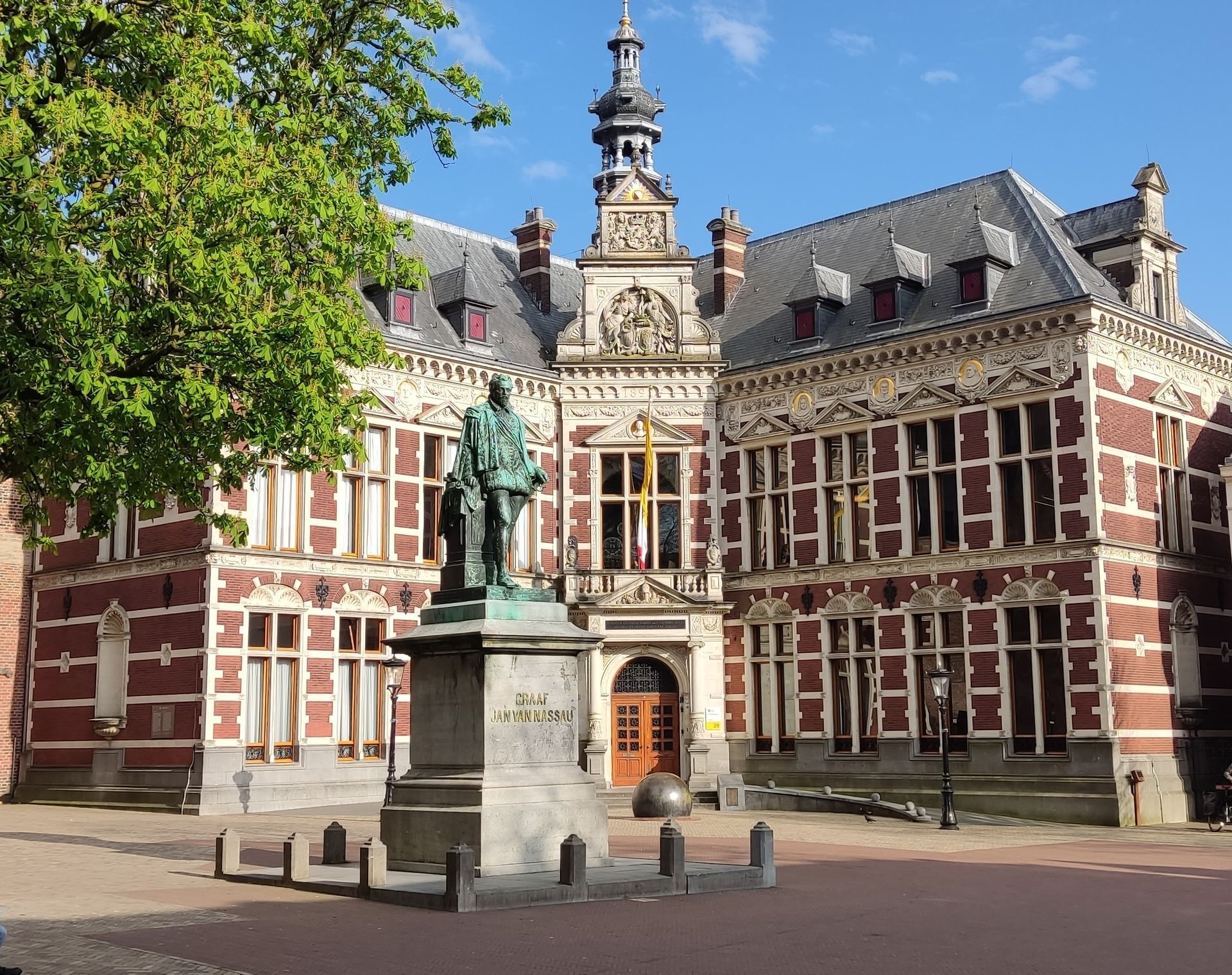
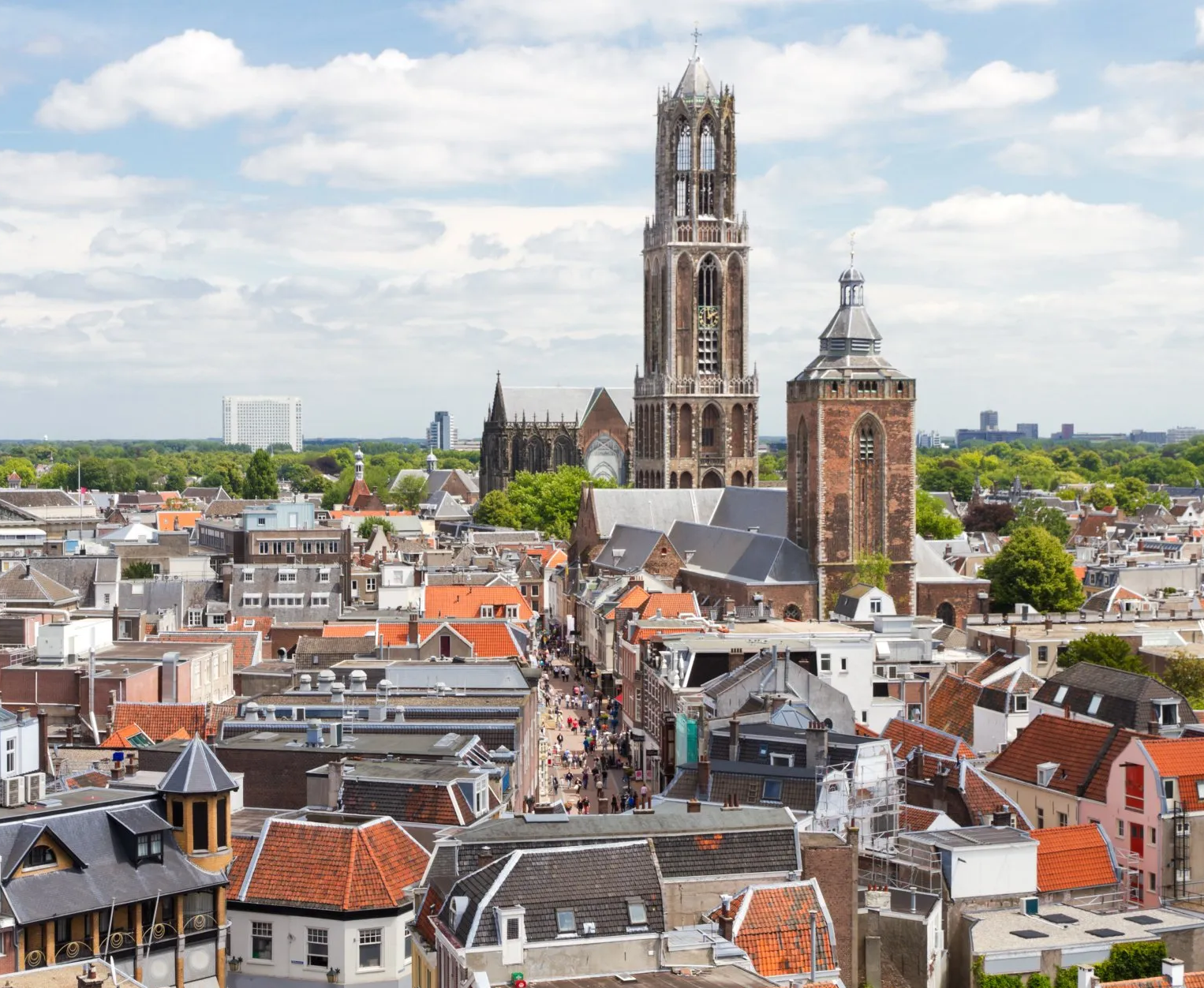
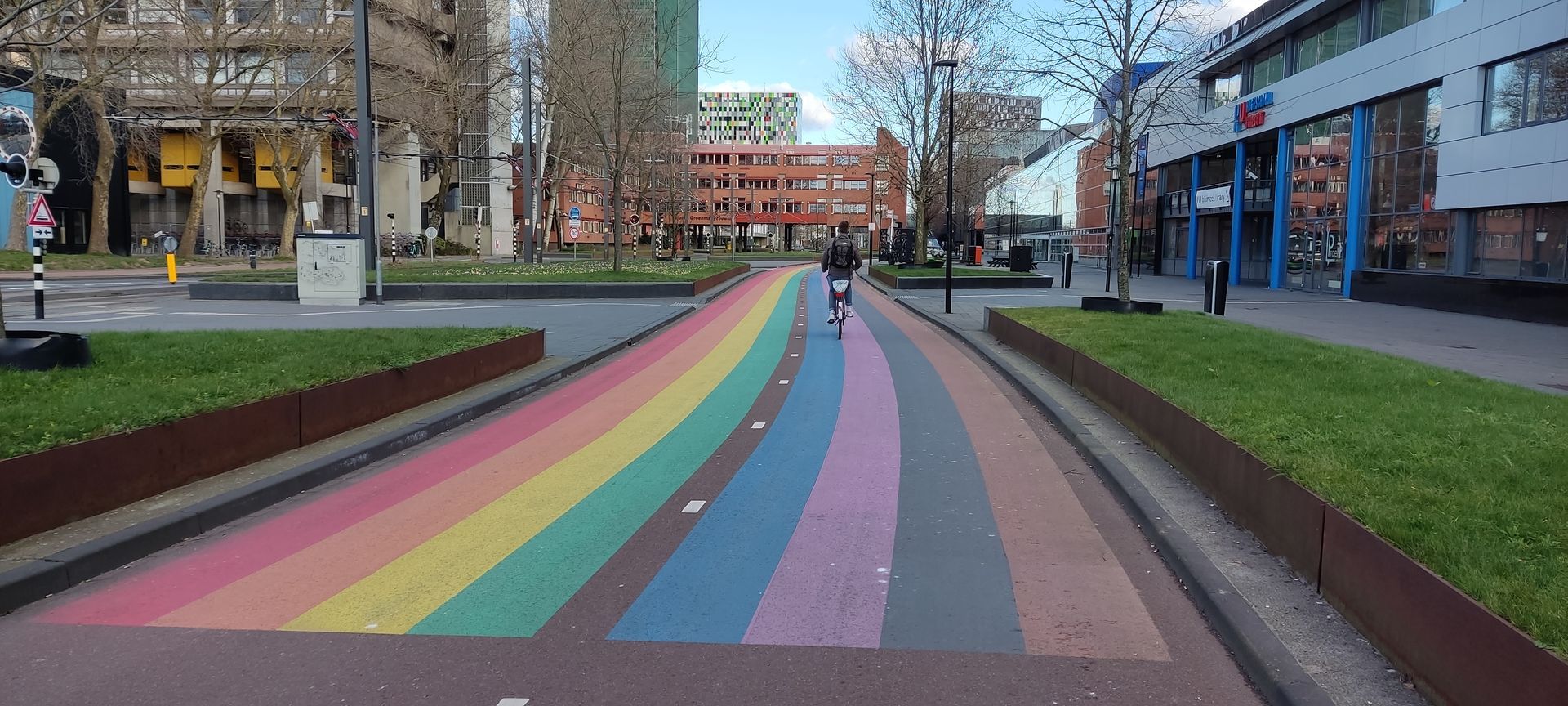
Utrecht and the University are inextricably linked. Utrecht is a true student city. On the streets, you see a young, lively population and packed terraces. Utrecht University has approximately 40,000 students, and around 10,000 employees. This makes it the largest employer in the city. Add to that the students of the University of Applied Sciences Utrecht and the total number of students exceeds 70,000, roughly half of whom live here.
A festive founding in 1636
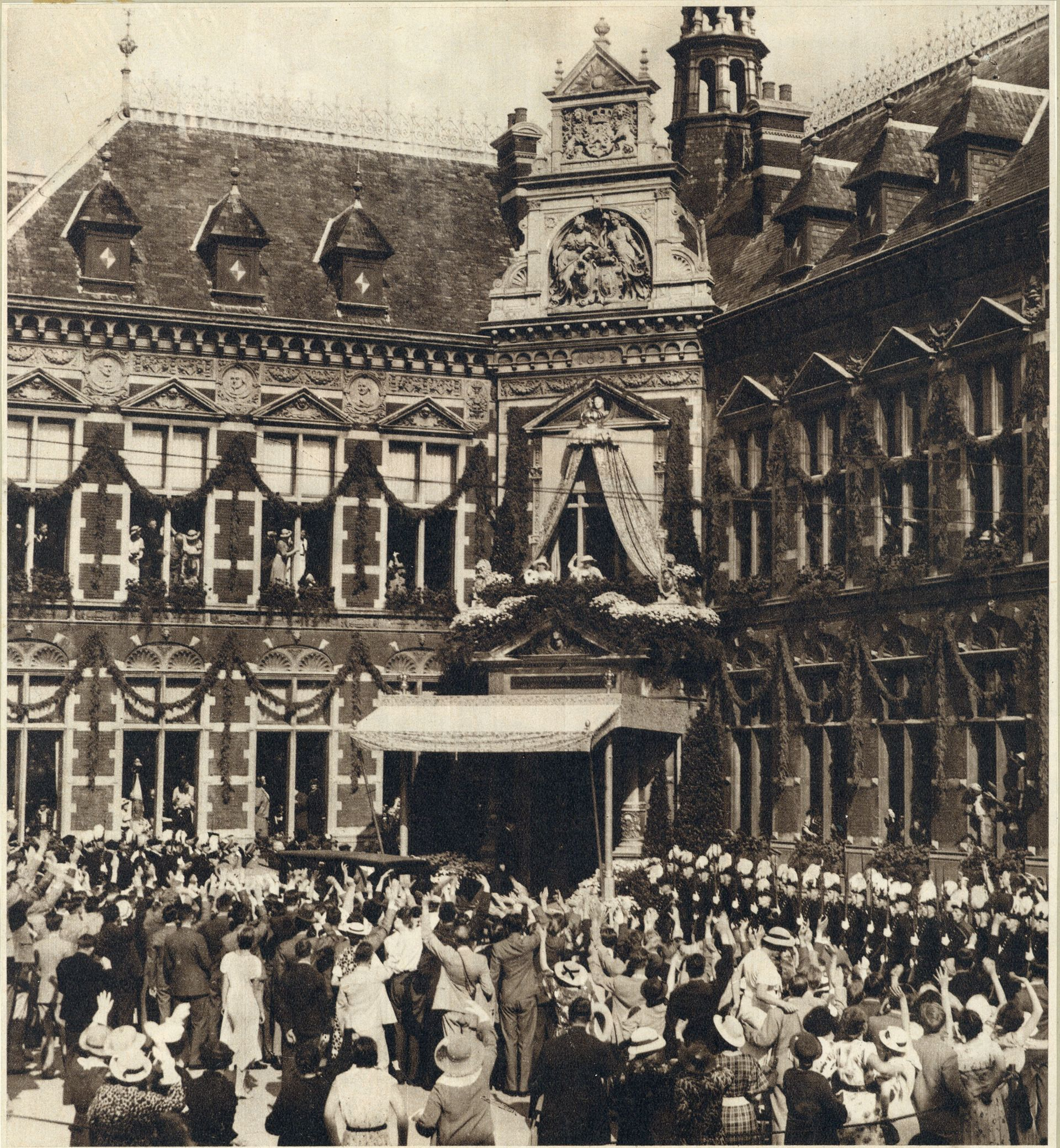
The city had harbored the intention to establish a university as early as 1470. However, it was not until March 16, 1636, that a founding charter was issued and the university's predecessor, the Illustrious School founded in 1634, was elevated to an Academy .
The States of Utrecht (Province) had issued a so-called charter elevating the university's predecessor, the Illustrious School founded in 1634, to an Academy. This document has been preserved in the city administration archives. Ten days later, on March 26, there was a festive opening (Dies Natalis), with many high-ranking guests (princes, dukes, and the King of Bohemia). In the Cathedral, the first professor, Gisbertus Voetius, delivered an opening address, and in the afternoon there was a dinner. All the church bells in the city rang, and in the evening there were fireworks on the Neude square.
A remarkable request
Two weeks after the founding of Utrecht University in 1636, a group of professors submitted a special request to the city council (the “vroedschap”). In the interest of the academy’s reputation, they asked that students be exempted from taxes on beer and wine.
The city council of Utrecht refused to agree to this. It feared widespread tax evasion in the city. Therefore, the exemption from taxes on beer and wine was granted only to students who came from outside the city. Nevertheless, the professors did not accept this decision. They feared that students would choose another university where they could enjoy this exemption (such as Leiden or Franeker) and would not return after the summer break. Once again, the professors submitted a request for an exemption—only this time to the States of Utrecht (the provincial government)—and with greater success. From then on, students in Utrecht could drink beer and wine at reduced prices in the city.
The faculties of Utrecht University
When it was founded, the university consisted of four faculties. The first year was a preparatory program in philosophy (including mathematics, humanities, and history). Afterward, students could choose between Law, Medicine or Theology. The university employed seven professors and had several dozen students. There were two lecture halls, but most professors taught from their own homes. Bernardus Schotanus was appointed as the first Rector Magnificus.
After its founding, the city library in the Janskerk evolved into the university library. The first librarian was the physician Cornelis Booth, for whom a room was specially built on the side of the Janskerk (located next to the current bike path).
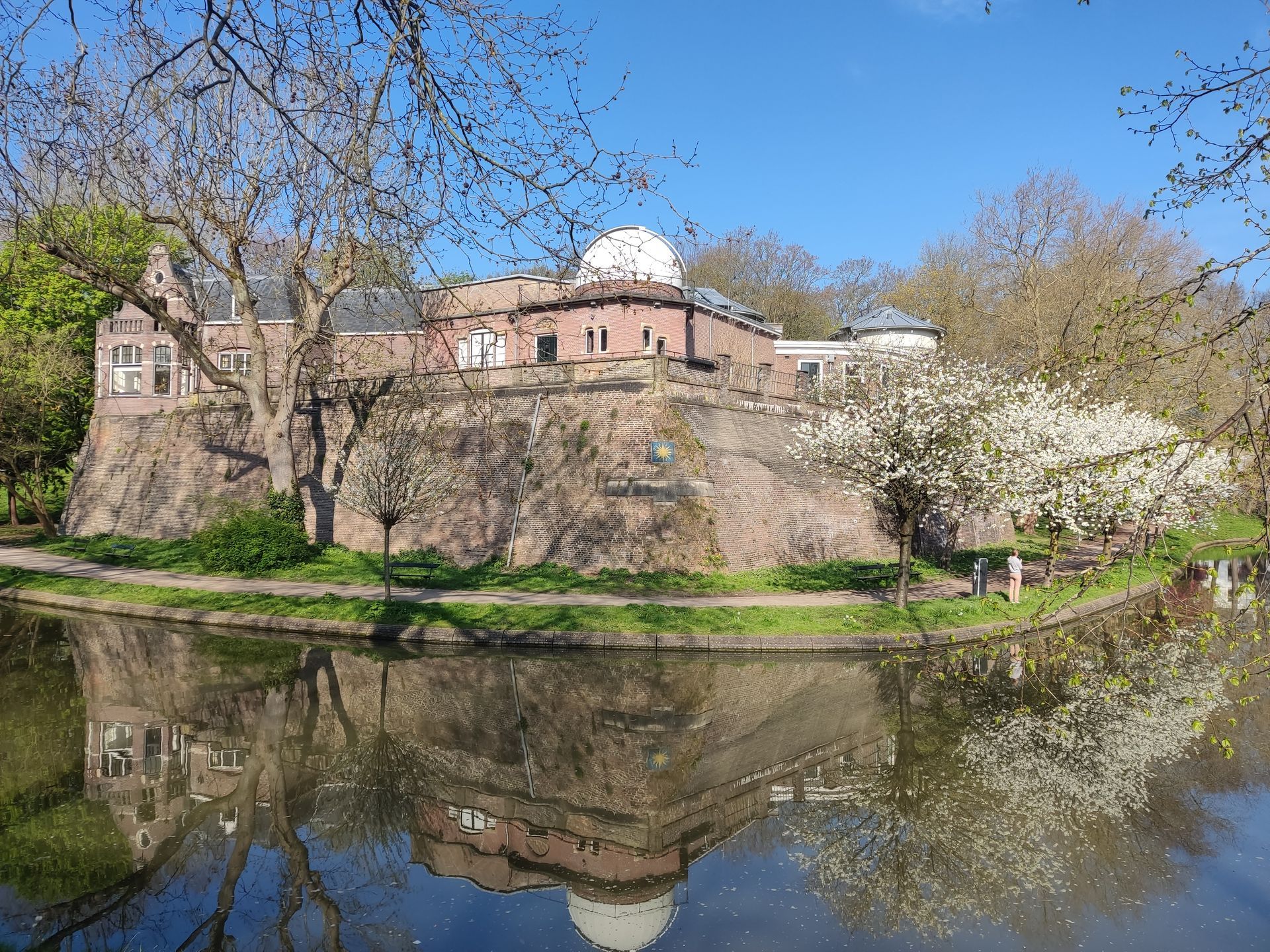
A medicinal botanical garden (hortus botanicus) was laid out at Sonnenborgh, and a tower on the city wall was converted into an observatory (the “smeetoren”). The hospital in the Catharijneconvent on Lange Nieuwsstraat became the academic hospital.
“Sol Iustitiae Illustra Nos” (Sun of Justice, Enlighten Us) was the Latin motto adopted by Utrecht University.
Having fun at the Maliebaan
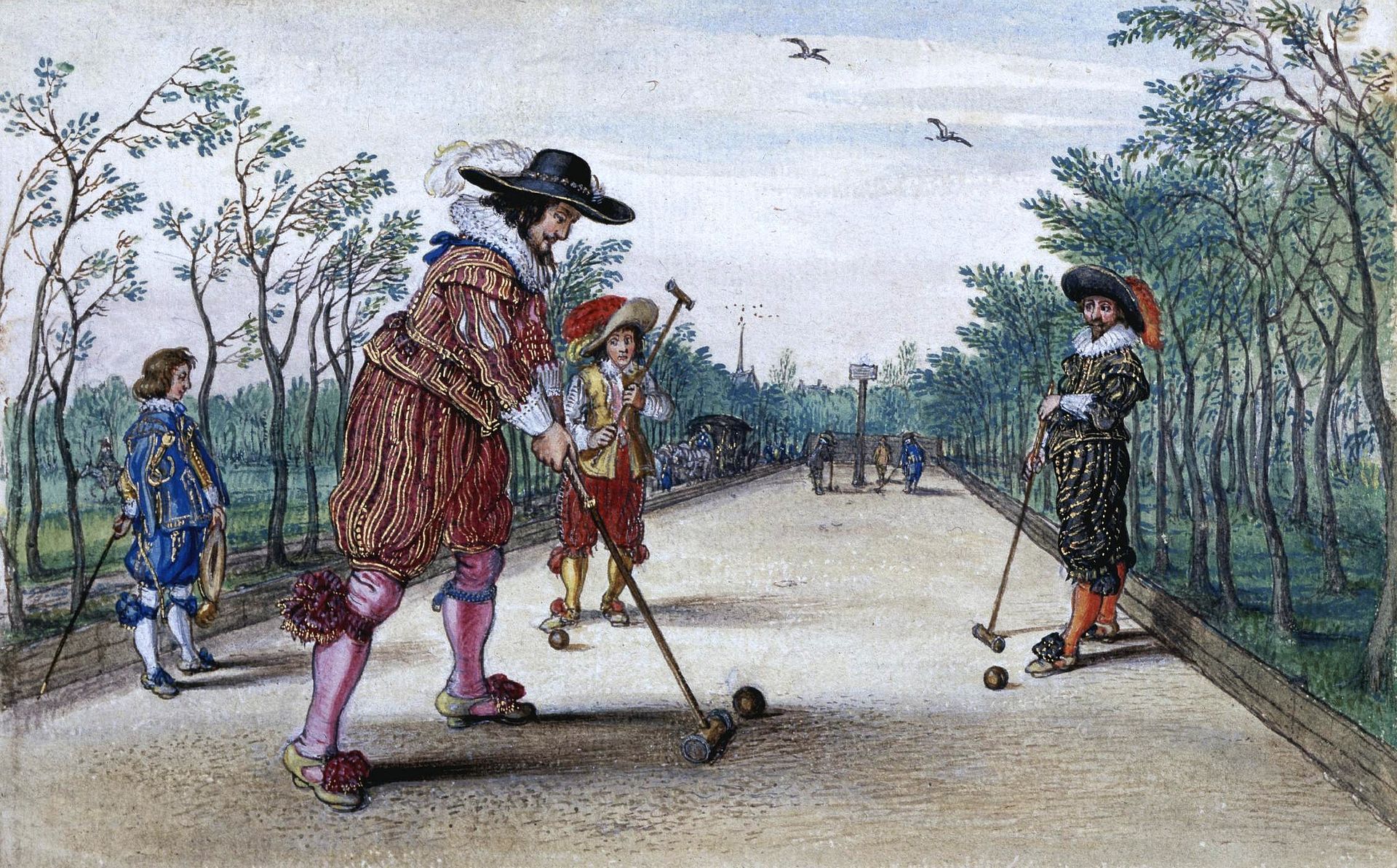
As a university town, it was of course important to attract enough students. Therefore, a fencing school and a riding school were established. In 1637, the city council also decided to build a so-called Maliebaan.
The game of pall mall was very popular among students. It is somewhat similar to golf (a precursor to it), and the goal is to hit a ball through a small iron gate in as few strokes as possible. On the east side of the city, just outside the city moat, a magnificent 740-meter-long course for this game was laid out, lined with 1,600 trees. The course manager lived in the adjacent inn (now the Maliehuis). There, you could rent clubs and balls, leave your coat in storage, and enjoy a drink. The beer and wine being sold were cheaper since the inn was located just outside the city borders and city taxes didn't apply there. The Maliebaan soon became a place for having fun and entertainment that lasted well into the late hours. Through a small gate, the Maliepoort, night owls were allowed to enter the city even after 10:00 p.m.
The struggle with René Descartes
When it was founded, Utrecht University was a Protestant Reformed stronghold with a clear mission. Gisbertus Voetius, professor of theology, was the figurehead of orthodox piety. According to Voetius, a radical renewal of religious practice was necessary. He believed that pure Reformed doctrine should form the foundation of society. He fiercely opposed new ideas in an effort to counteract the decline in society. However, the emergence of a new philosophy of science—a paradigm shift in which everything was called into question—was imminent.
In 1618, the French philosopher René Descartes visited the Netherlands for the first time. Attracted by the scientific freedom and discoveries in the Republic, Descartes remained here for more than 20 years. In 1635, he lived for a time in Utrecht on the Maliebaan and wrote a large part of his most important work there (Discours de la Méthode, 1637). In it, Descartes argues that it is wise to cast everything into doubt from time to time. You can then construct a new worldview—composed of small certainties—in a rational, mathematical, and scientific manner.
Descartes’s philosophy became increasingly popular among young academics. However, it stood in direct opposition to the theological views of the theologian Voetius. He saw this theory as a great danger, because it ultimately left room to doubt the existence of God. A fierce academic battle broke out between Voetius and Descartes and their followers. At the universities of Leiden and Utrecht, scholarly debates spiraled completely out of control, and both professors and students came to blows. To prevent further escalation, a ban on carrying weapons in the lecture hall was imposed (something that was quite common at the time). Ultimately, Utrecht University banned the teaching of Descartes’s philosophy altogether. A pamphlet in which Descartes vehemently attacked Voetius was also banned, and Descartes was even summoned to court in Utrecht over it. The intervention of the Prince of Orange ultimately prevented the legal proceedings from going forward.
Ultimately, Utrecht University found a (typically Dutch) middle ground in the academic debate. From then on, it was forbidden to mention the name Descartes. This allowed the orthodox scholars to claim victory. However, philosophizing and discussing his teachings were tacitly tolerated.
The fabulous Anna Maria van Schurman
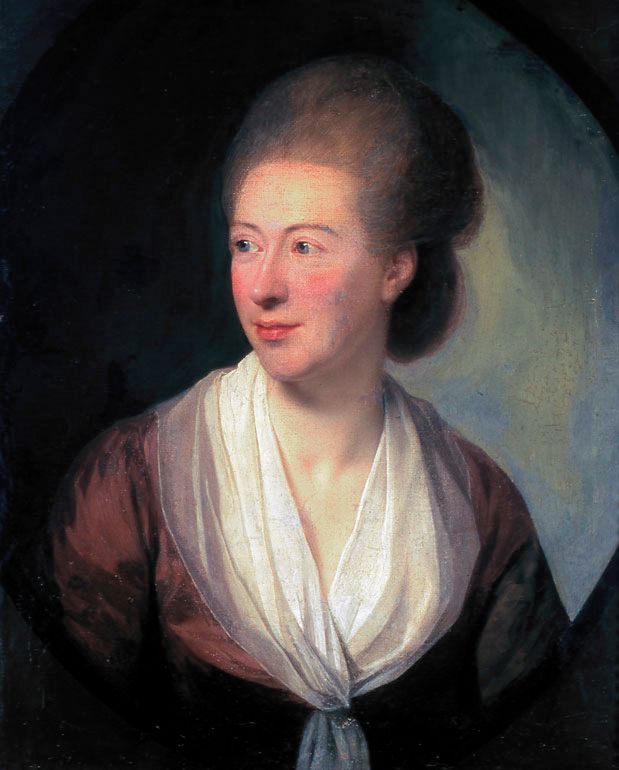
At a young age, Anna Maria van Keulen moved to Utrecht (1613). She was born into a Protestant family, but Catholic Cologne was not a suitable place for her to live. The family moved into a beautiful house behind the Cathedral. Her parents realized early on that Anna Maria was no ordinary child. By the age of three, she was already reading from the Bible and could recite passages from memory. The story goes that Anna-Maria’s father taught her two older brothers Latin. While playing in the same room, Anna Maria naturally picked up everything. Whenever her father asked the brothers a difficult question and they couldn’t answer, Anna-Maria’s clear voice would ring out from a corner of the room with the correct answer. Her father then decided to teach Anna Maria Latin as well, and later Greek. She proved to be such a quick learner of languages that by the age of 18, she spoke 14 different languages fluently. These included Hebrew, Arabic, Syriac, Persian, Aramaic, French, German, Italian, Spanish, English, and so on.
Anna Maria van Schurman also excelled in skills such as engraving, painting, drawing, sculpting, and poetry. In a short time, she became famous throughout the Netherlands. She corresponded with scholars and poets such as Heinsius, Revius, Cats, Huijgens (Constantijn), and Descartes, and by 1633 was known as “the jewel of learned women.”
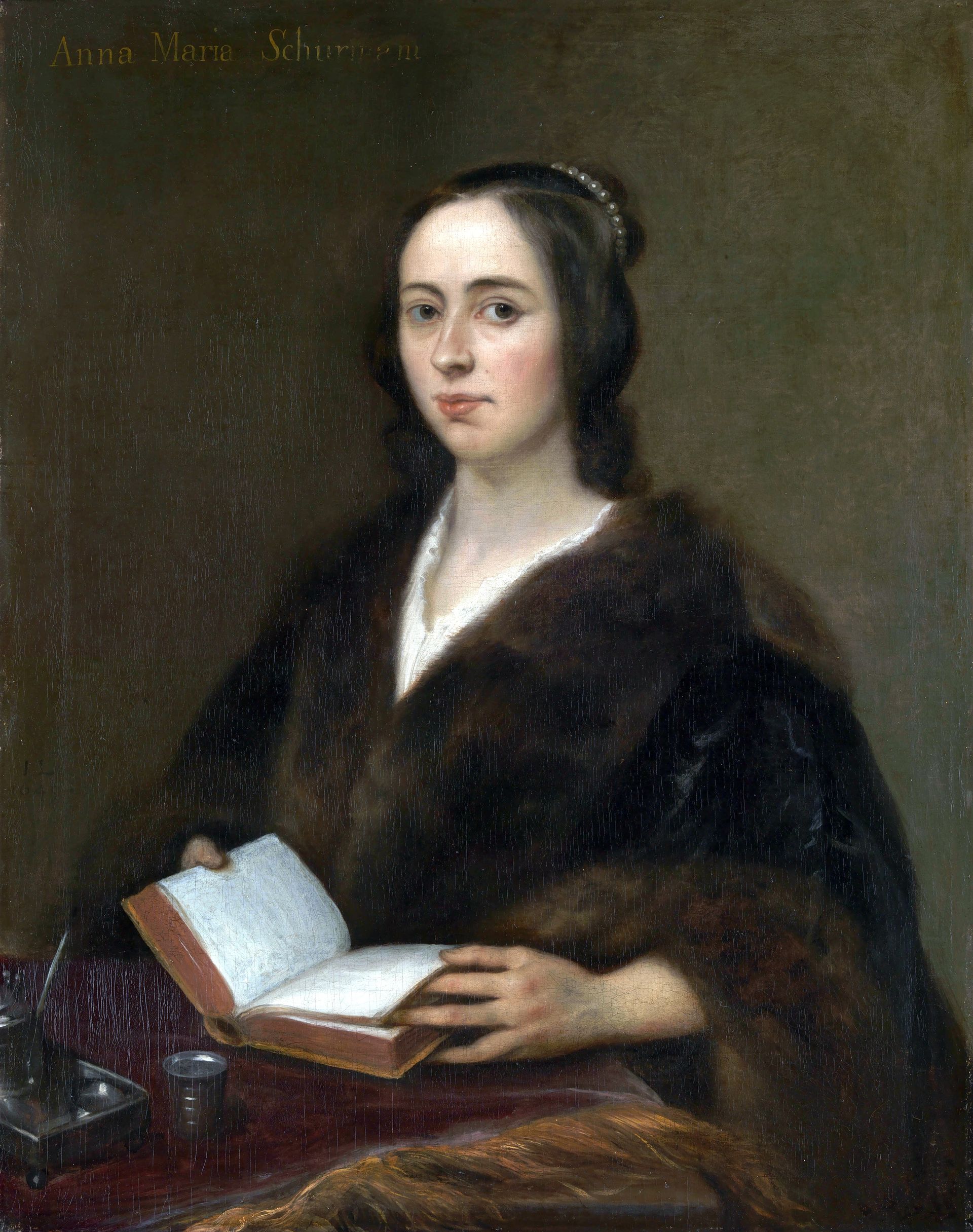
As early as 1636, Anna Maria wrote a eulogistic poem in Latin about Utrecht University. She also published an essay on the suitability of the female mind for science and the humanities. At the initiative of Professor Voetius, she was eventually admitted to Utrecht University. She was allowed to attend lectures, but not to sit in the pews next to the men. That was considered going too far. She sat in a corner of the classroom, in a custom-made cabinet, and she had to close a curtain every time the lessons started.
Anna Maria was a celebrity throughout Europe and received visits from the queens of England, Sweden, and France. At the age of 62, she joined a mystical sect (the Labadists) and withdrew to a convent. She is buried in a church in Wieuwerd (Friesland).
Today, Anna Maria van Schurman is something of a forgotten figure. This is likely because other women were not admitted to the university after her. Aletta Jacobs, for example, has become much better known in Dutch history because she was a key figure in the first wave of feminism. Yet it was Anna Maria who was the first female student in the Netherlands—and perhaps in all of Europe.
Trouble with Wilhelm Röntgen
Like Anna Maria, Wilhelm Röntgen was born in Germany and had moved to the Netherlands with his family. From 1863 to 1865, he lived on Nieuwegracht because he was attending the technical school in Utrecht. Wilhelm wanted to attend Utrecht University, but he first had to earn his diploma from the technical school there.
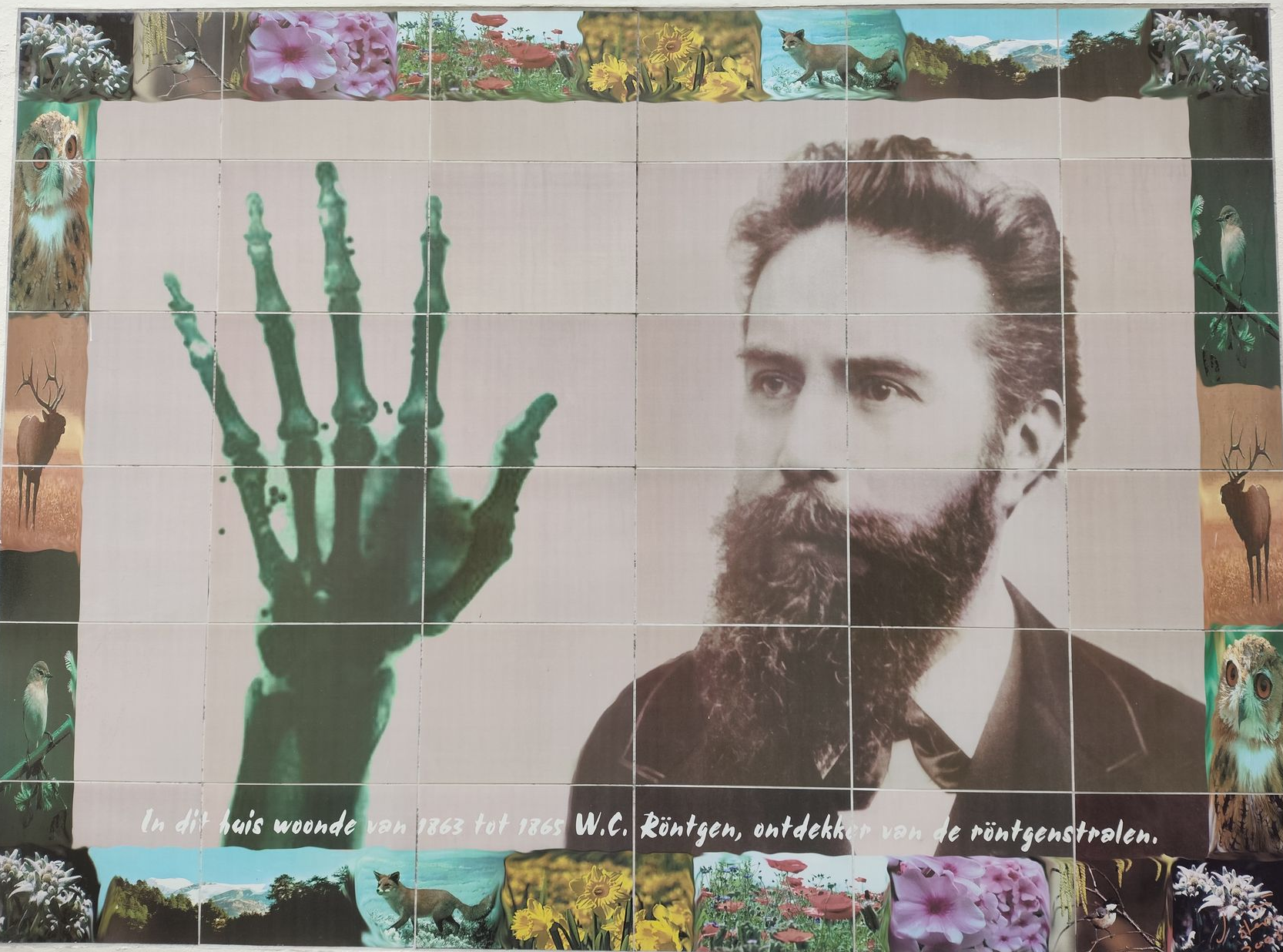
A well-known story about Wilhelm Röntgen is that he was often distracted by other things in class and didn’t seem to be paying attention. Teachers caught him drawing frequently during class. After several warnings, a teacher noticed that Röntgen was drawing again. This teacher had had enough and ordered him to hand over the drawings. Once he had the drawing, the teacher saw a caricature of himself and became furious.
Some time later, Wilhelm Röntgen had to take his final exam with the very same teacher whose caricature he had drawn. It is unknown exactly why, but Röntgen received a failing grade on his exam. Combined with the fact that he did not have a very good command of Latin, this meant he was not admitted to Utrecht University. After two years in Utrecht, Röntgen left for Zurich, where the requirements for admission to the university were less stringent. He, of course, successfully completed his studies, and the rest is history.
Much later in his career, Utrecht University offered him a position. However, Wilhelm Röntgen never returned to Utrecht again.
Murals about Utrecht University
In honor of Utrecht University and its researchers, you can find a number of beautiful murals throughout the city of Utrecht. Below is an overview.
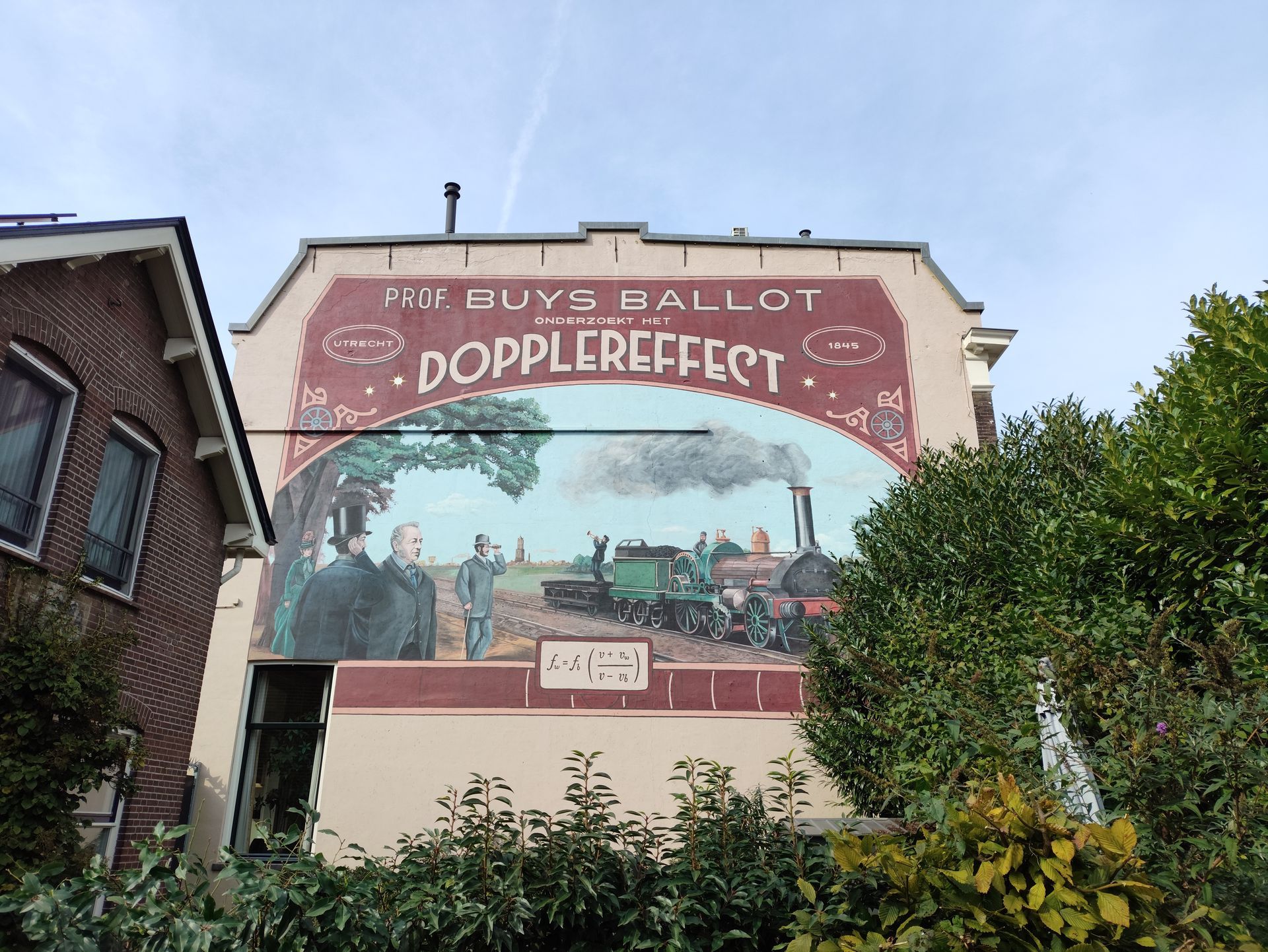
Prof. Buys-Ballot
studied the Doppler effect. The Doppler effect is the phenomenon whereby the pitch of a sound changes as it passes by at high speed (for example, an ambulance or airplane driving or flying by).
Prof. Ornstein
developed a theory of random motion. This made it possible to develop better models and make predictions.
Prof. Westerdijk
was a pioneer in plant pathology. In 1917, she became the first female professor in the Netherlands.
Prof. Donders
was an ophthalmologist and researcher who developed the classification of vision disorders (farsightedness, nearsightedness, and presbyopia). He founded the first hospital for eye patients in the Netherlands.
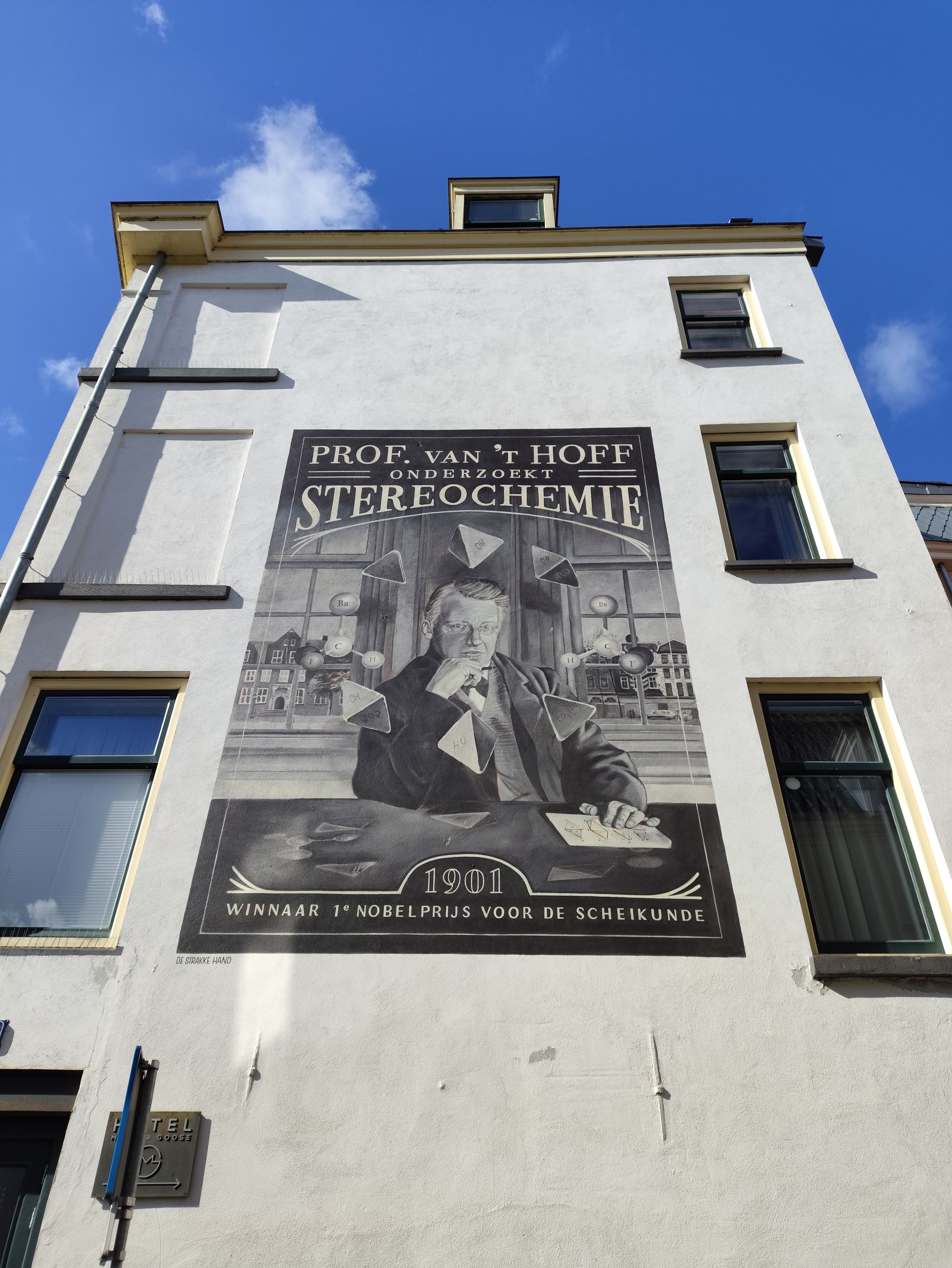
Prof. van ‘t Hoff
discovered the concept of stereochemistry. This means that molecules composed of the same elements can have very different properties due to their different structures.
Dr. Bleeker
developed the phase-contrast microscope in collaboration with prof. Zernike. She also started a successful manufacturing company in technical instruments.
Did you know that...
...King Louis Napoleon moved to Utrecht in 1807, and for a short time it served as the capital of the Netherlands. The palace he had built at that time now houses the University Library in the city center.
...Napoleon abolished Utrecht University in 1811. He downgraded it to a regular college.
...you can only study veterinary medicine in Utrecht (or abroad).
...Buys-Ballot founded the KNMI at the Sonneborgh.
...there are 12 Nobel Prize winners with ties to Utrecht University.
...Biologist B. Roelen at Utrecht University has done pioneering work in the development of cultured meat.
...On March 23, 2005, Utrecht University rehabilitated and reinstated the French philosopher Descartes. Since then, it has once again been formally permitted to mention his name.
If you'd like to learn more about the history of Utrecht University, book a guided city walk!